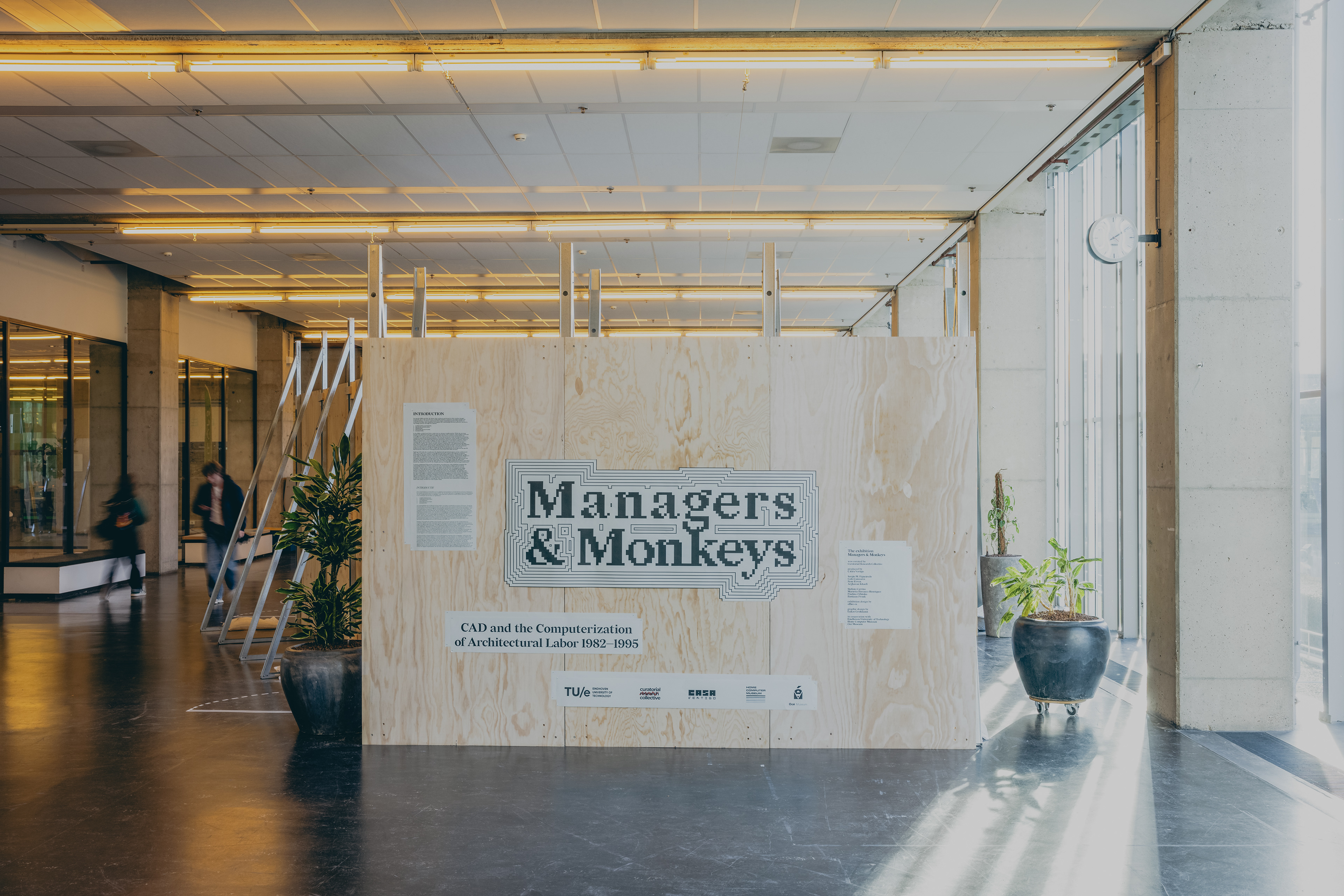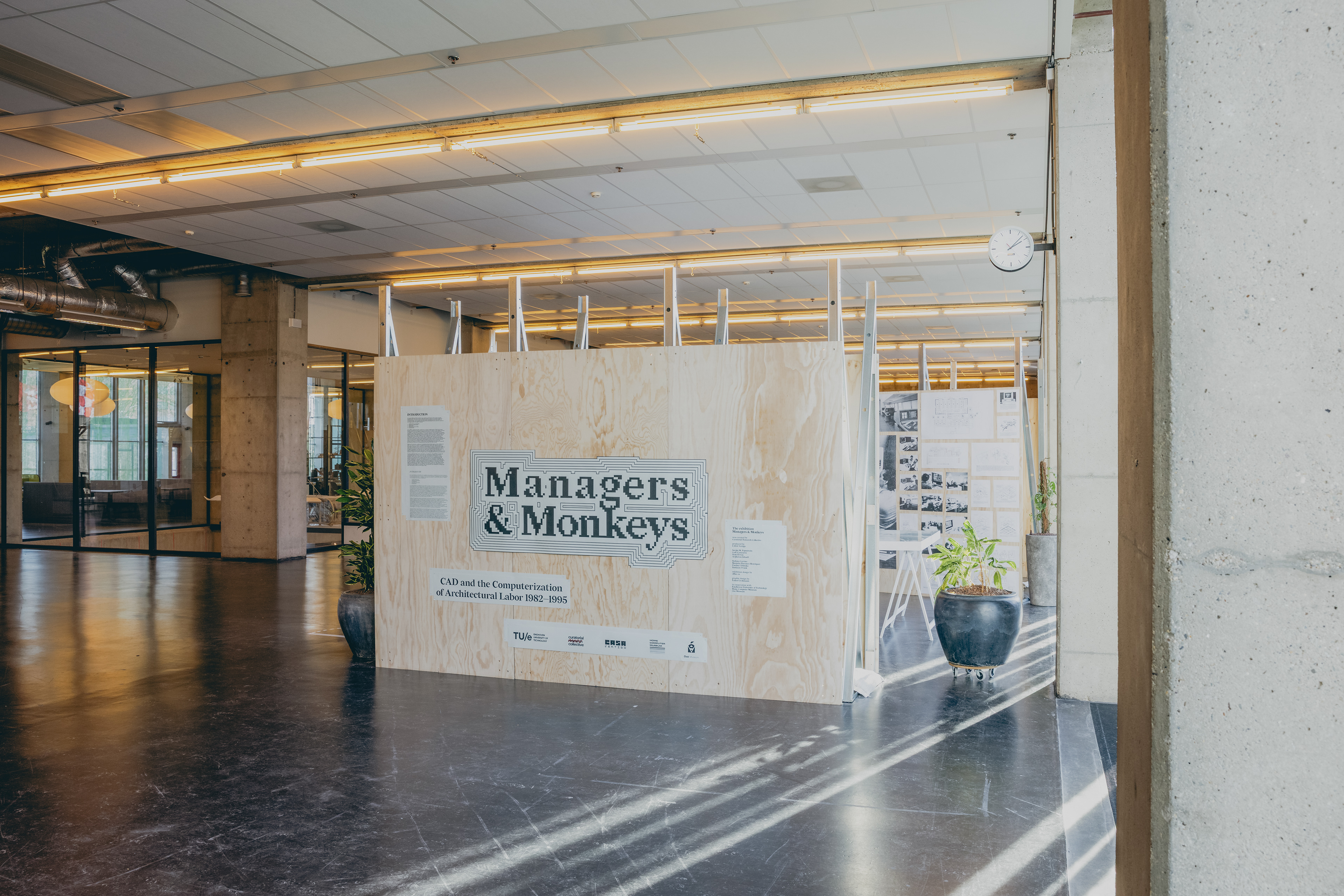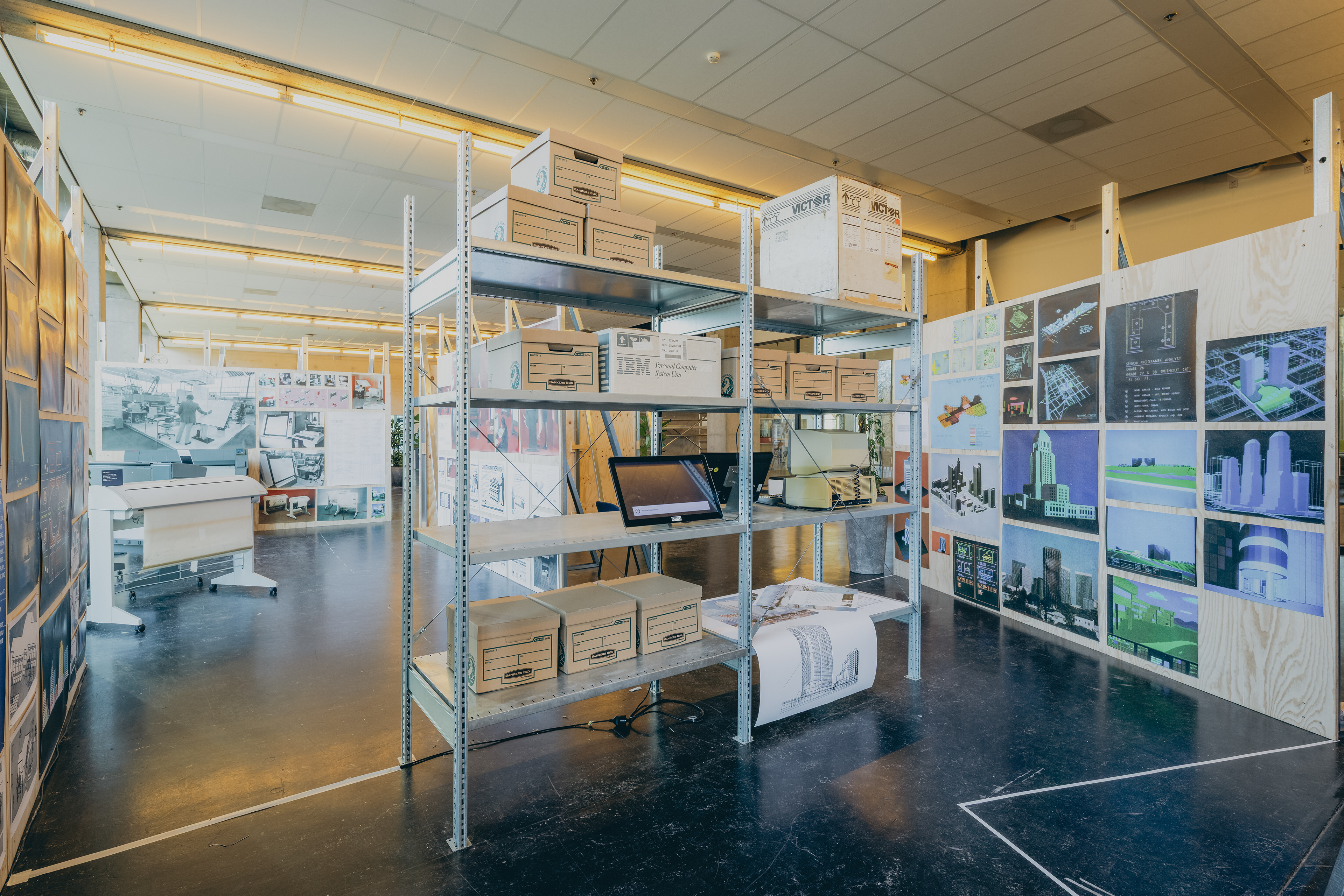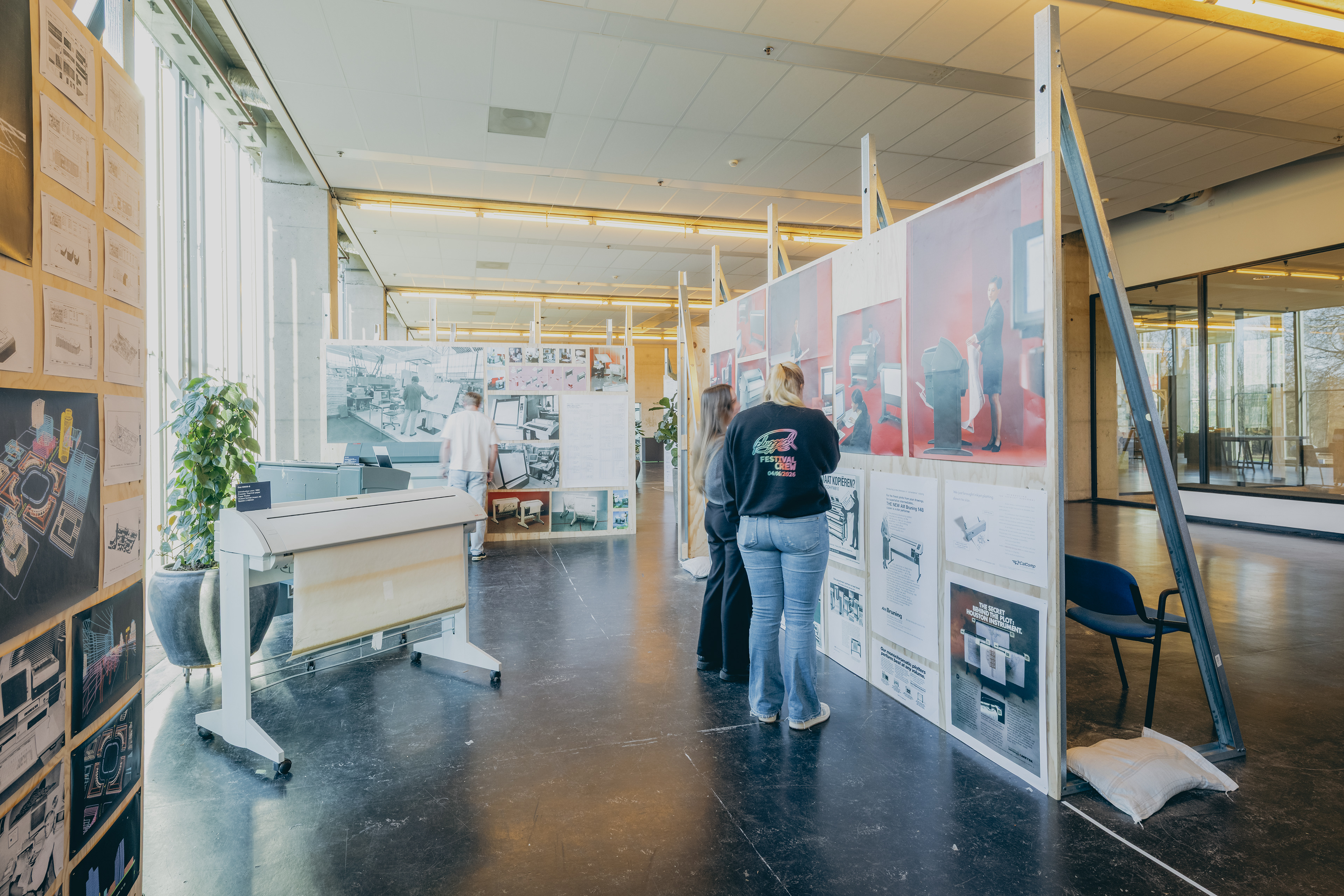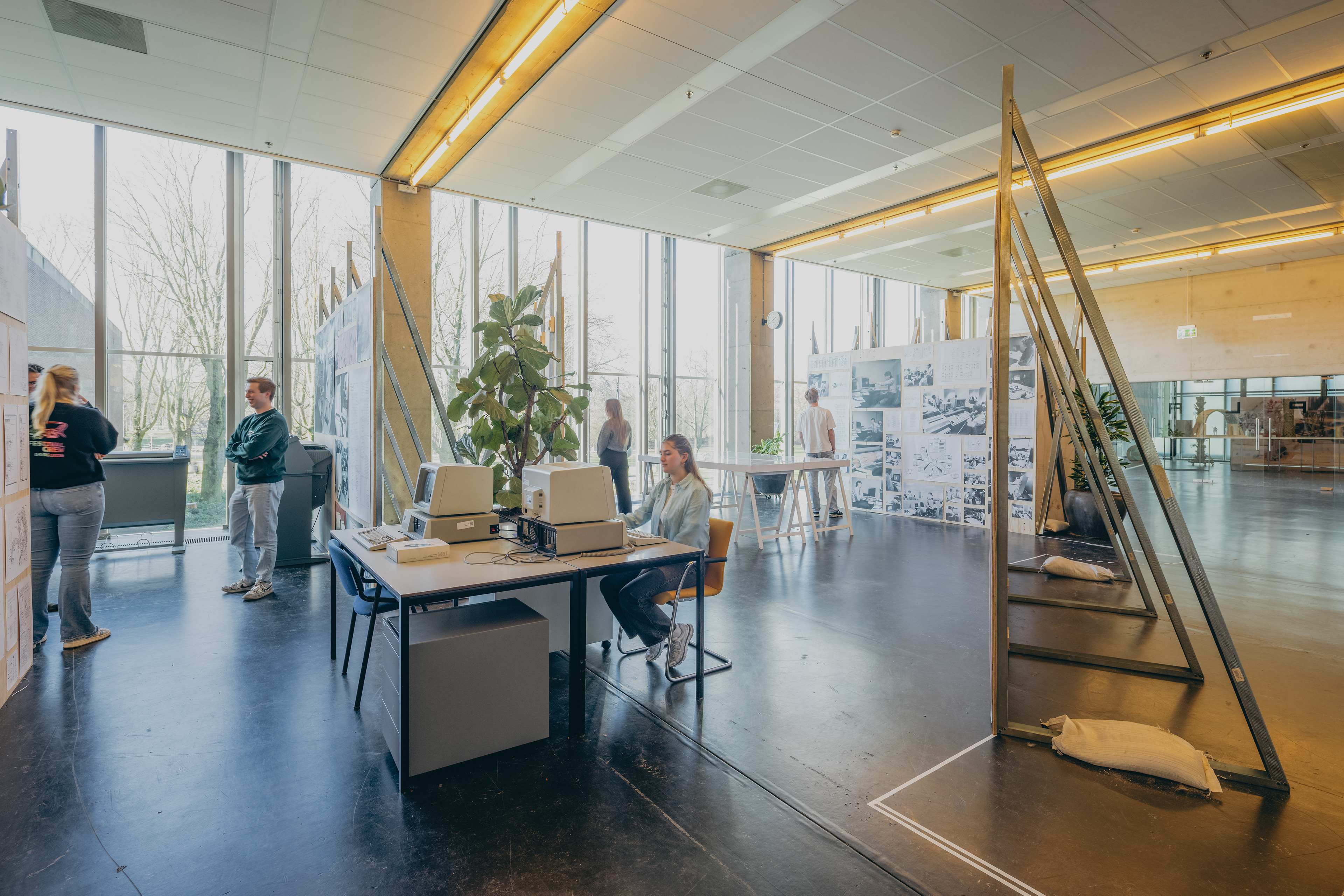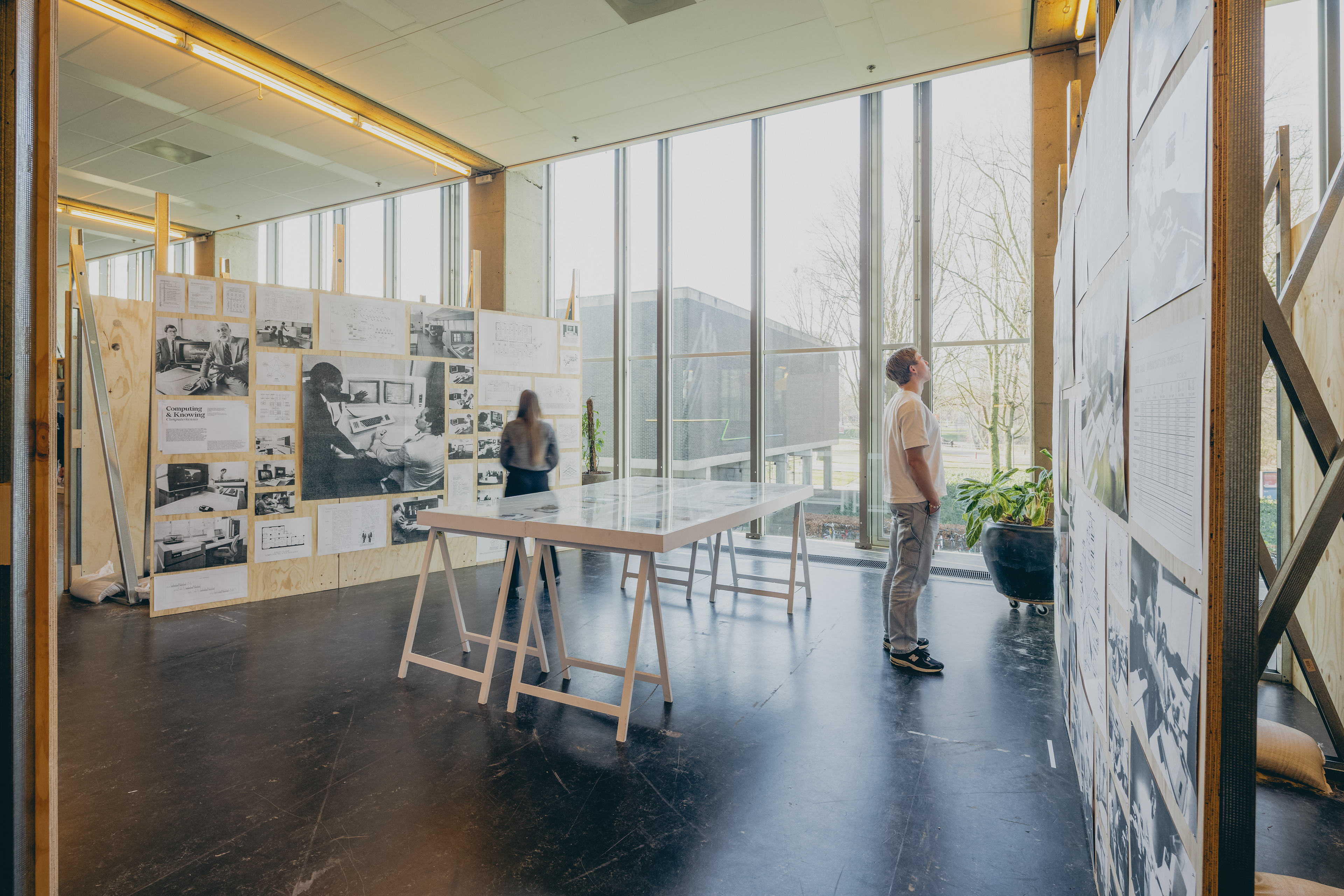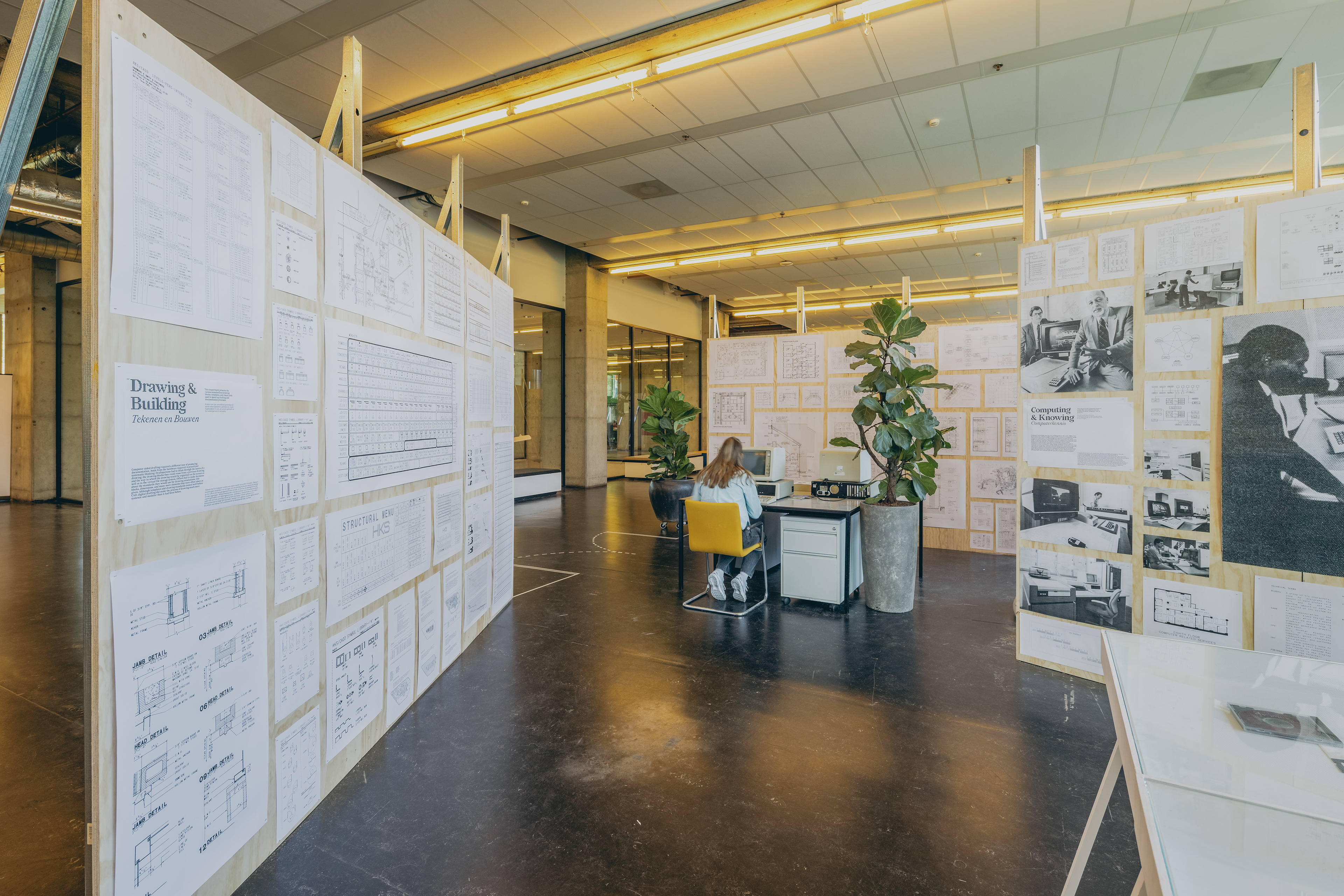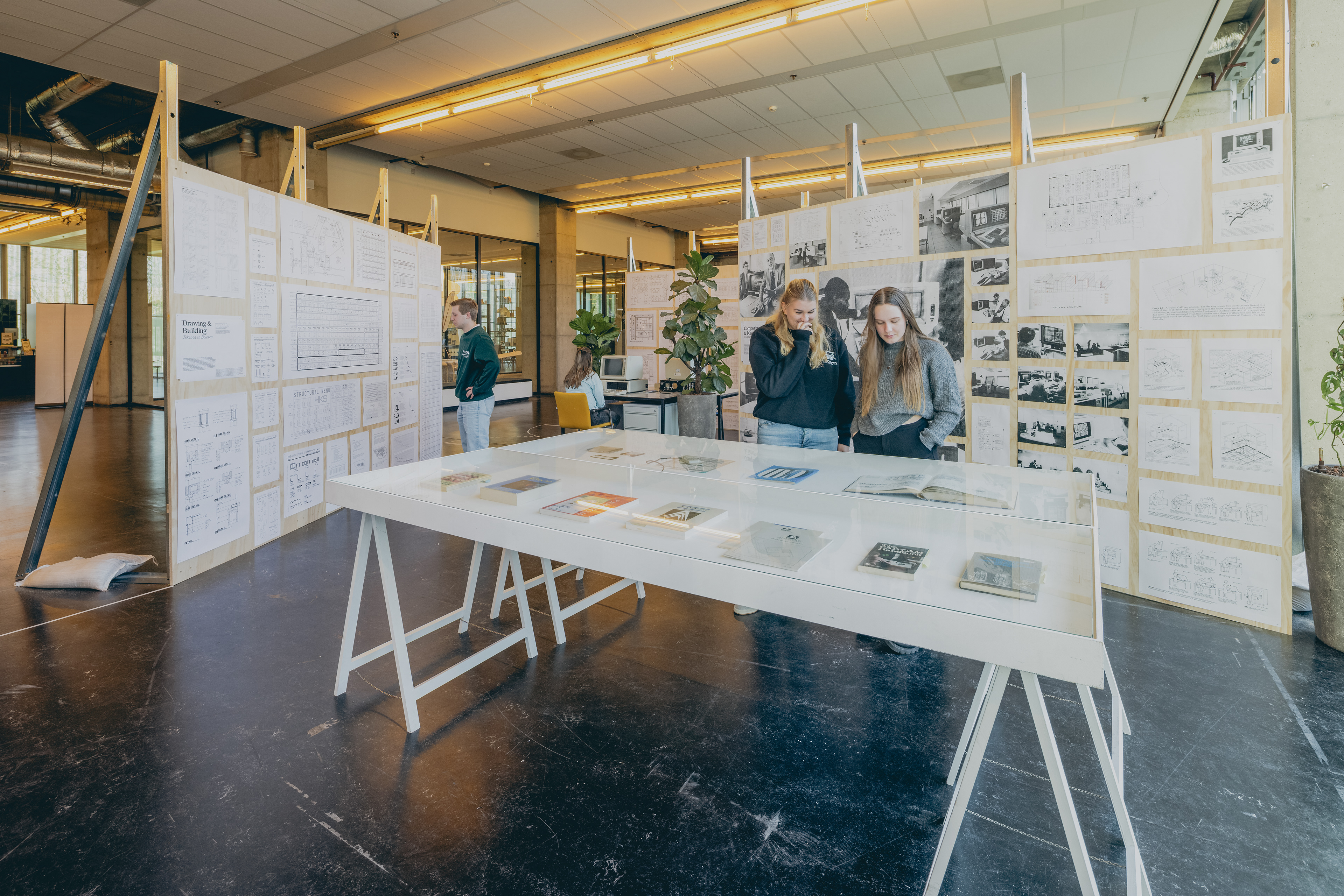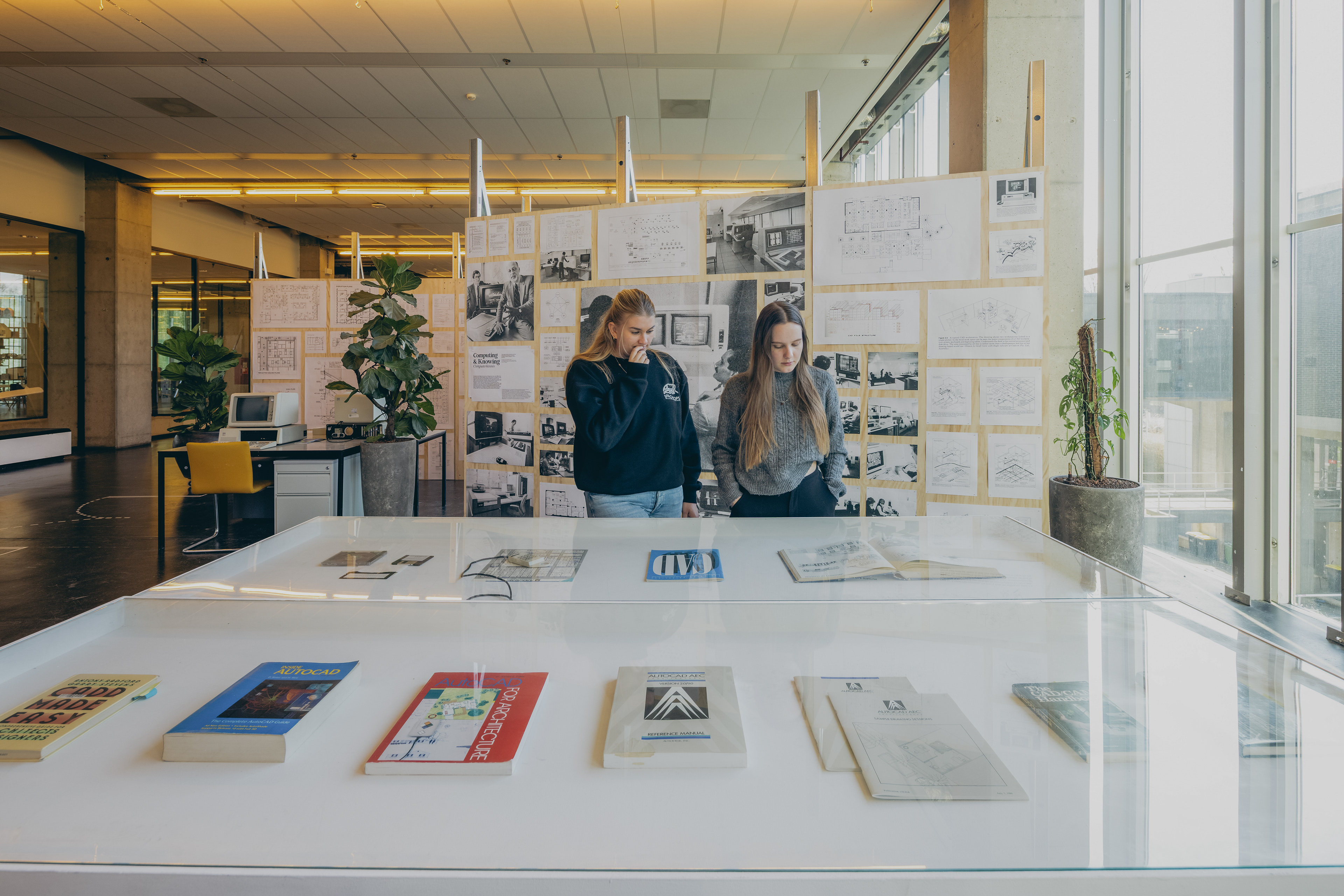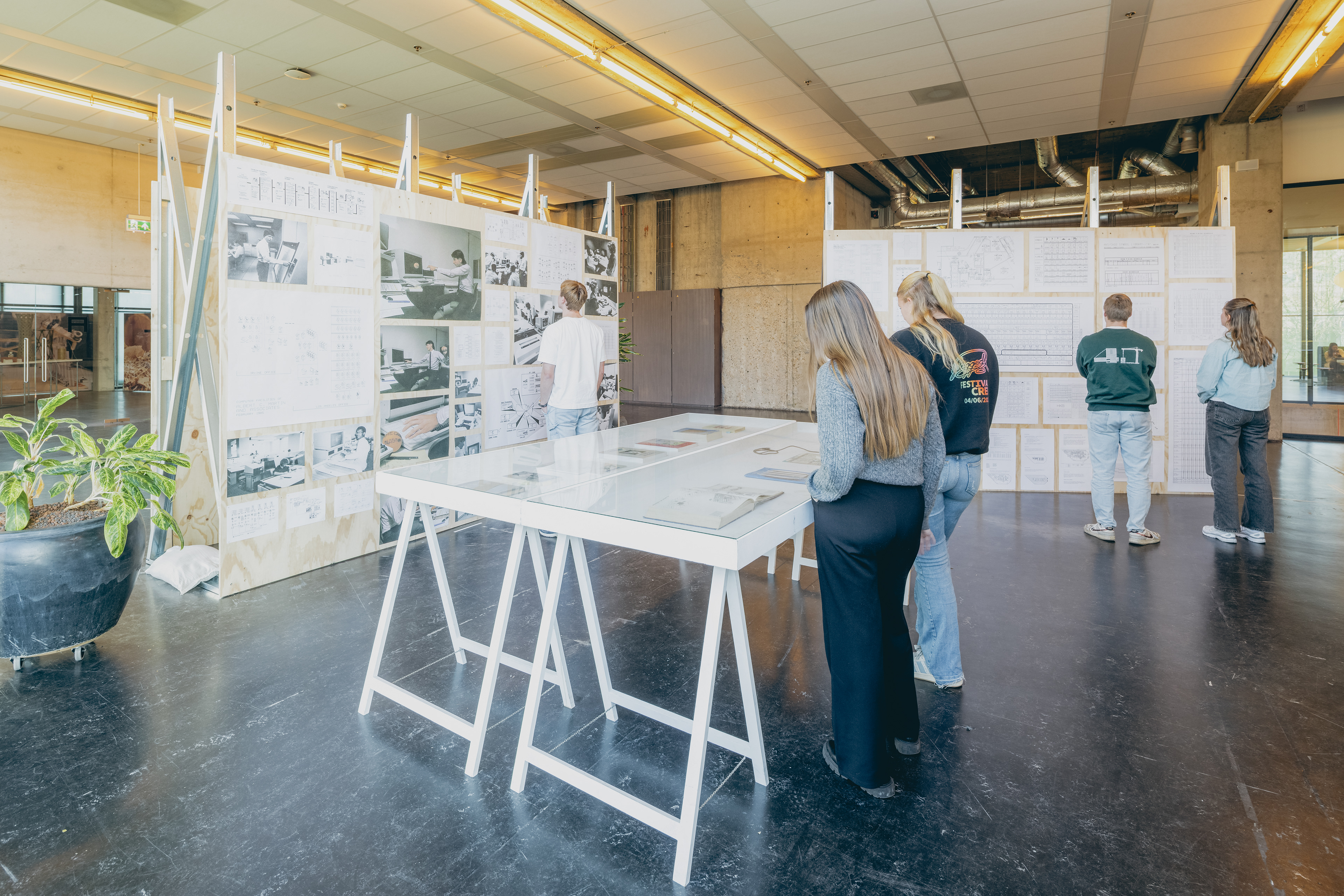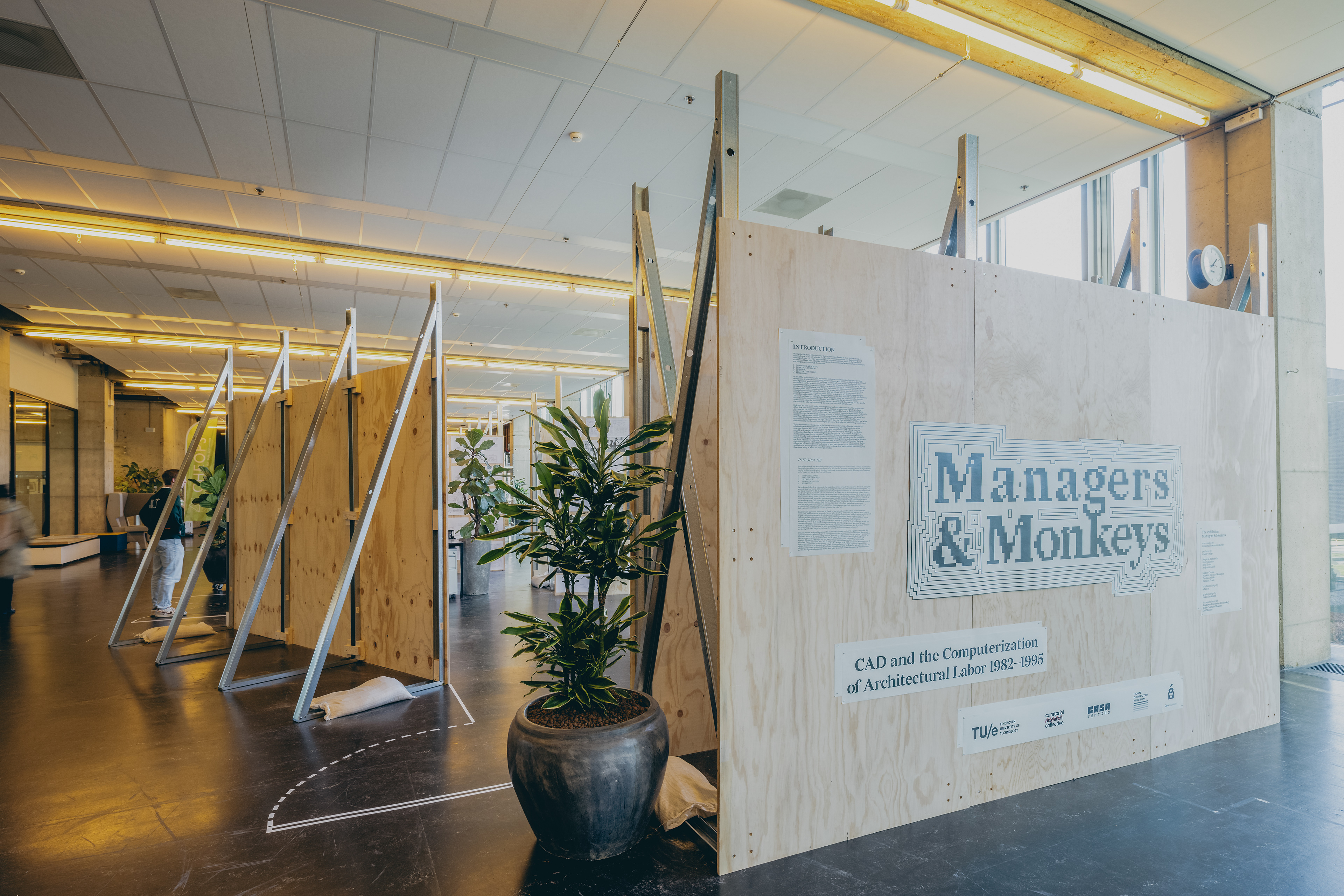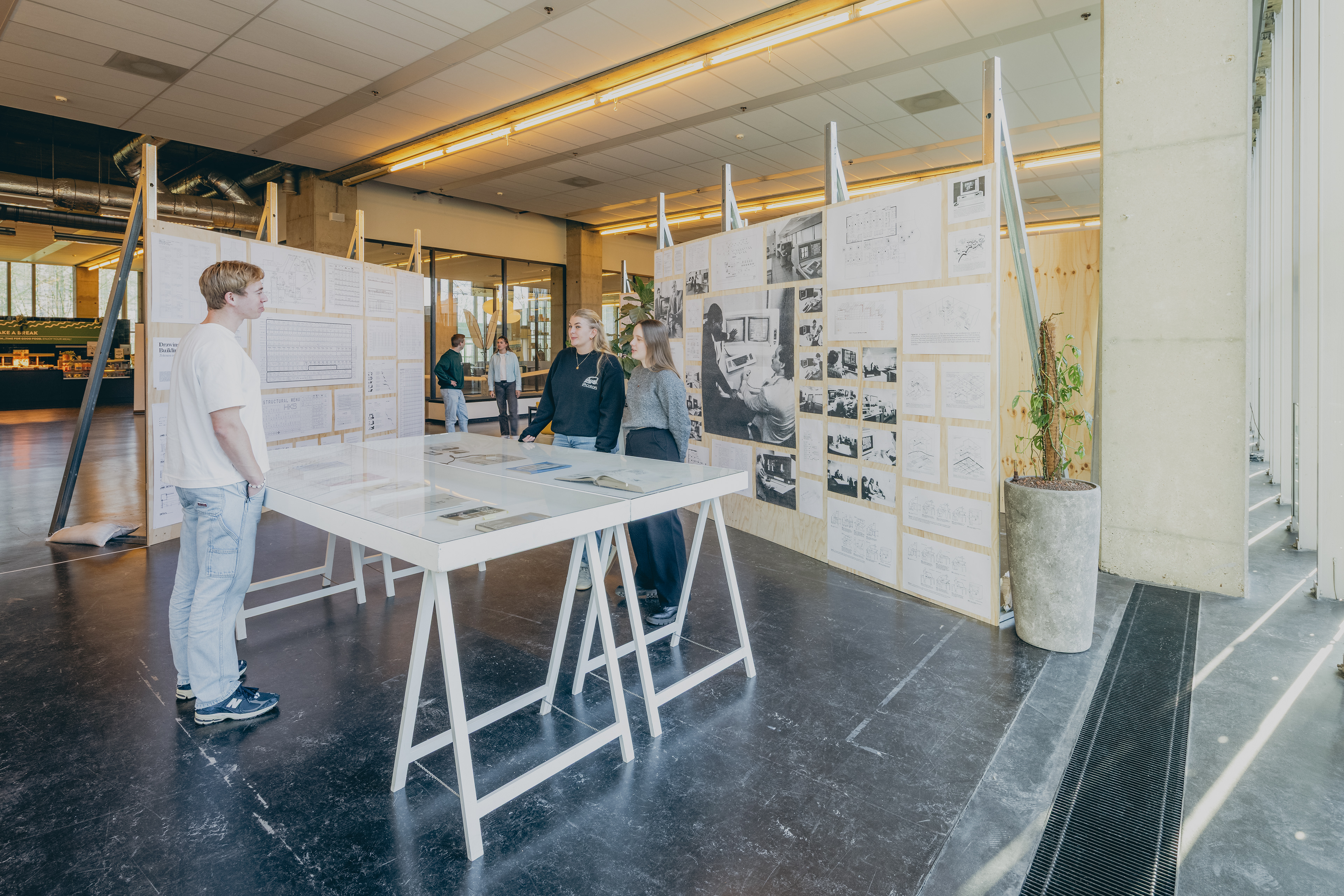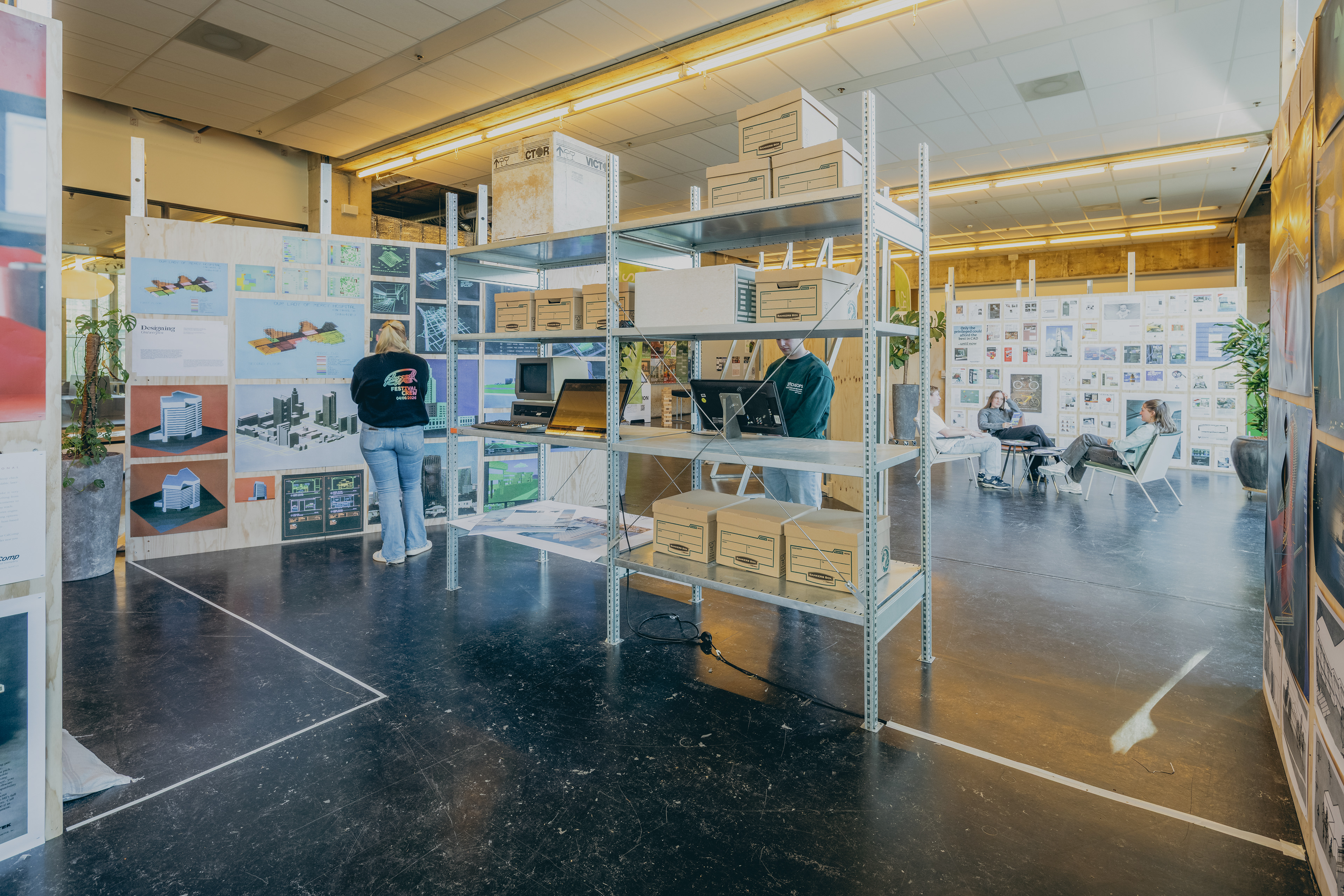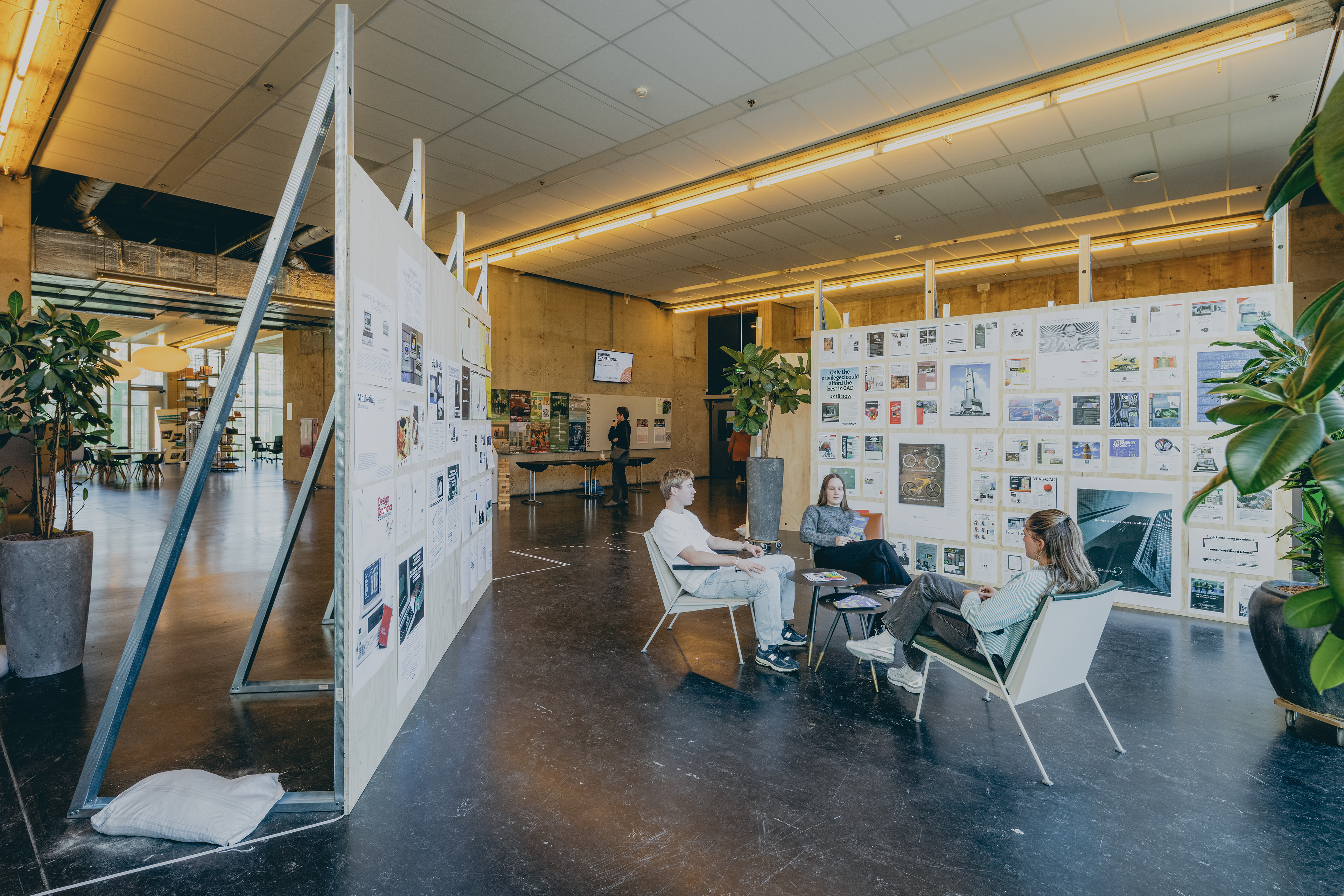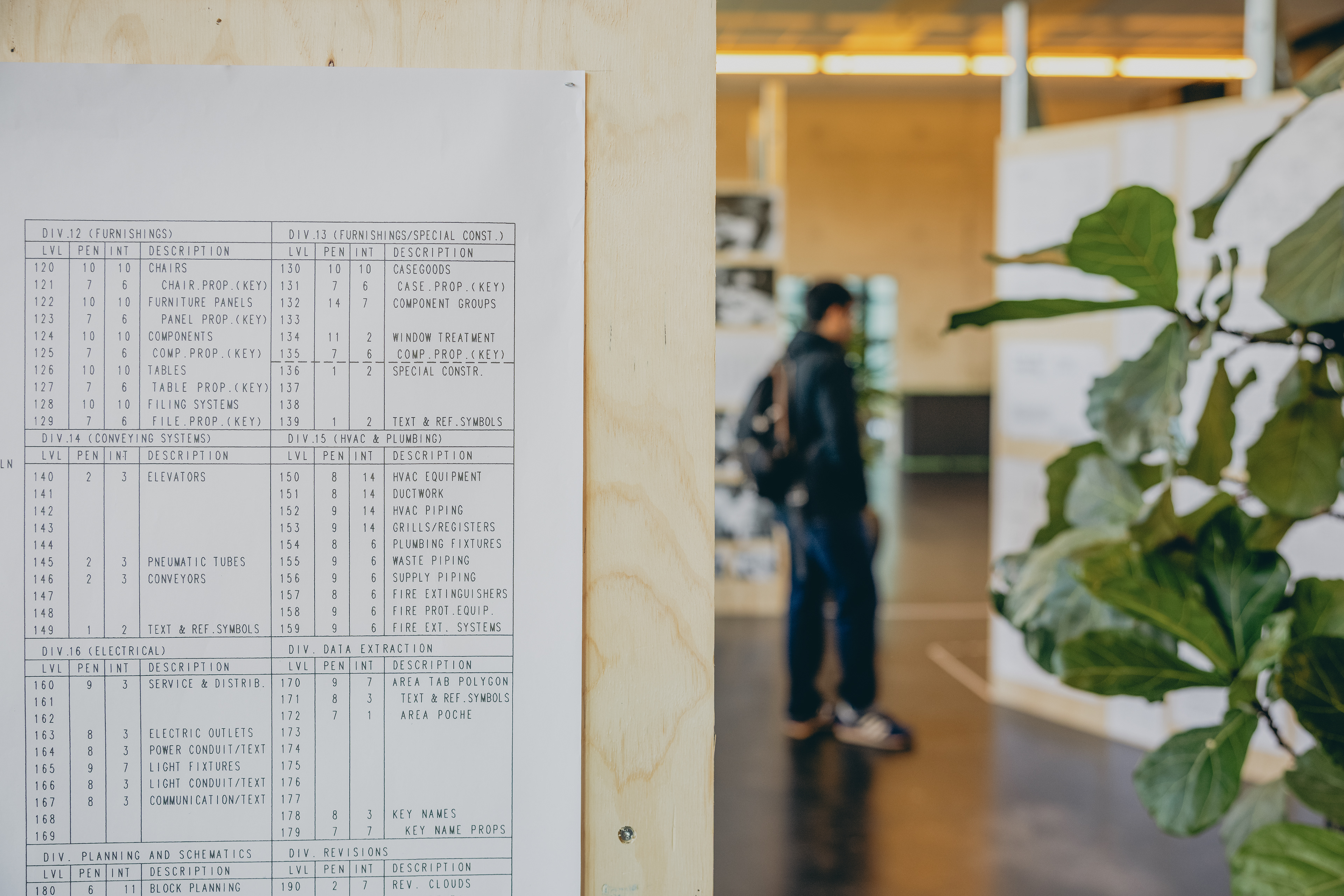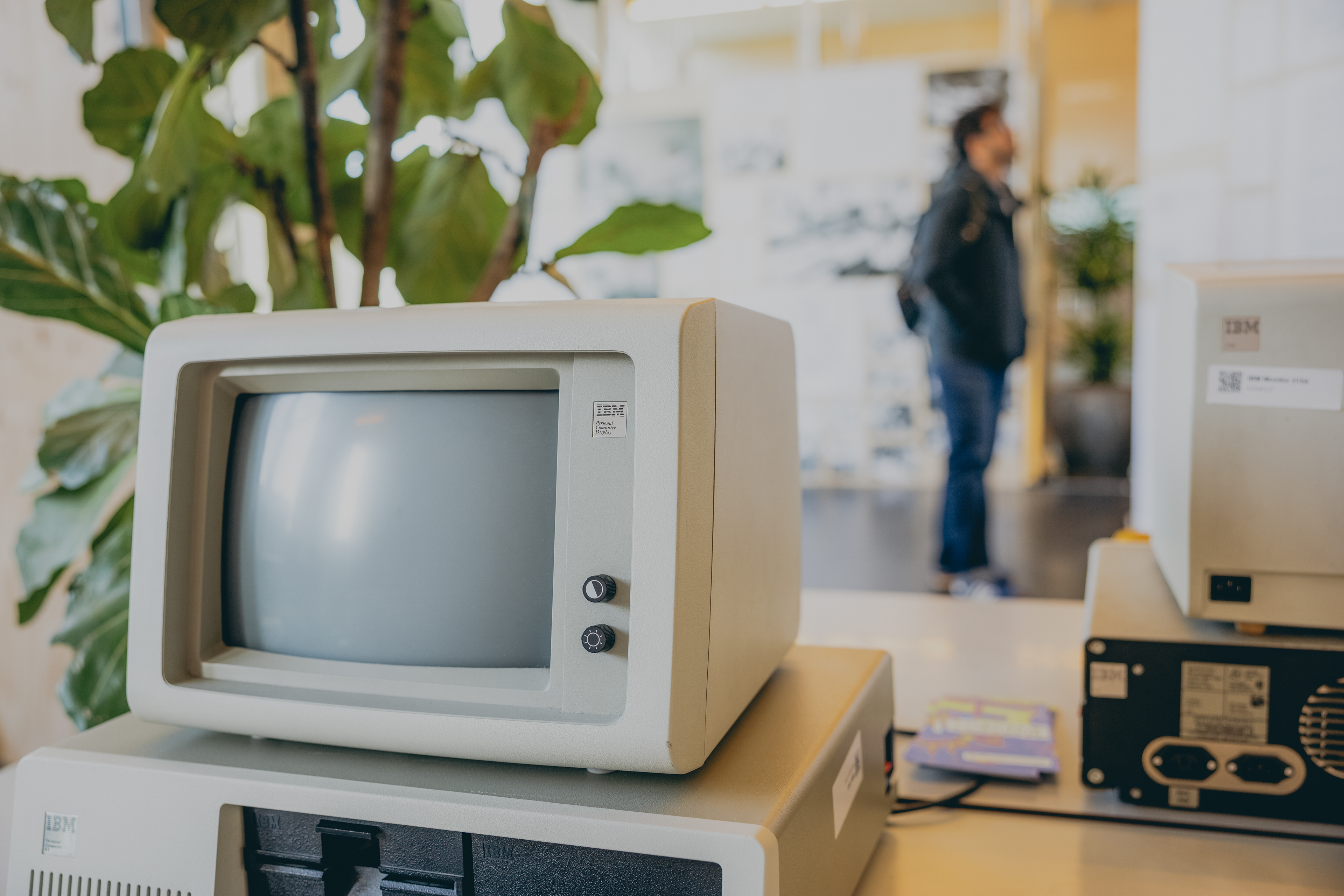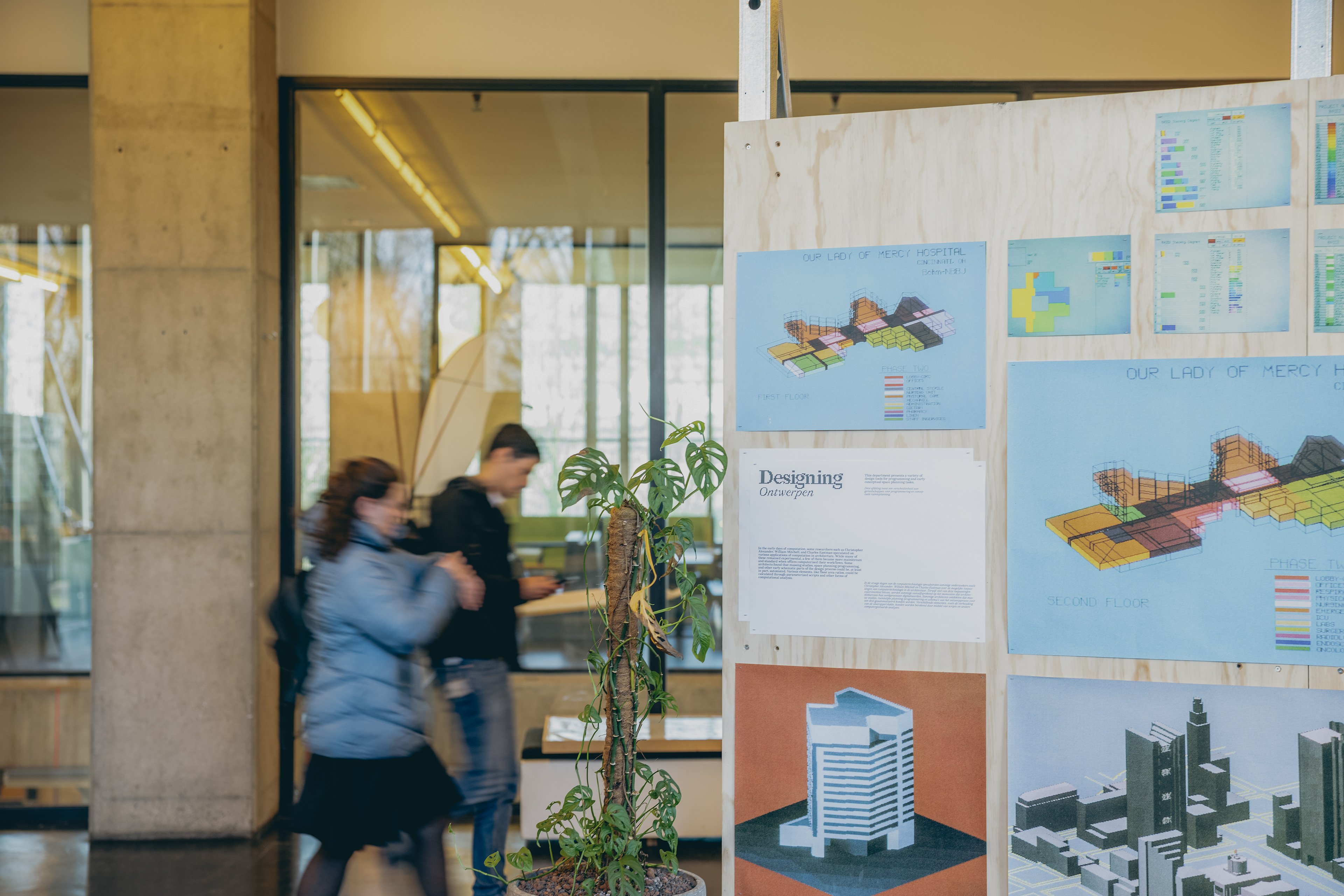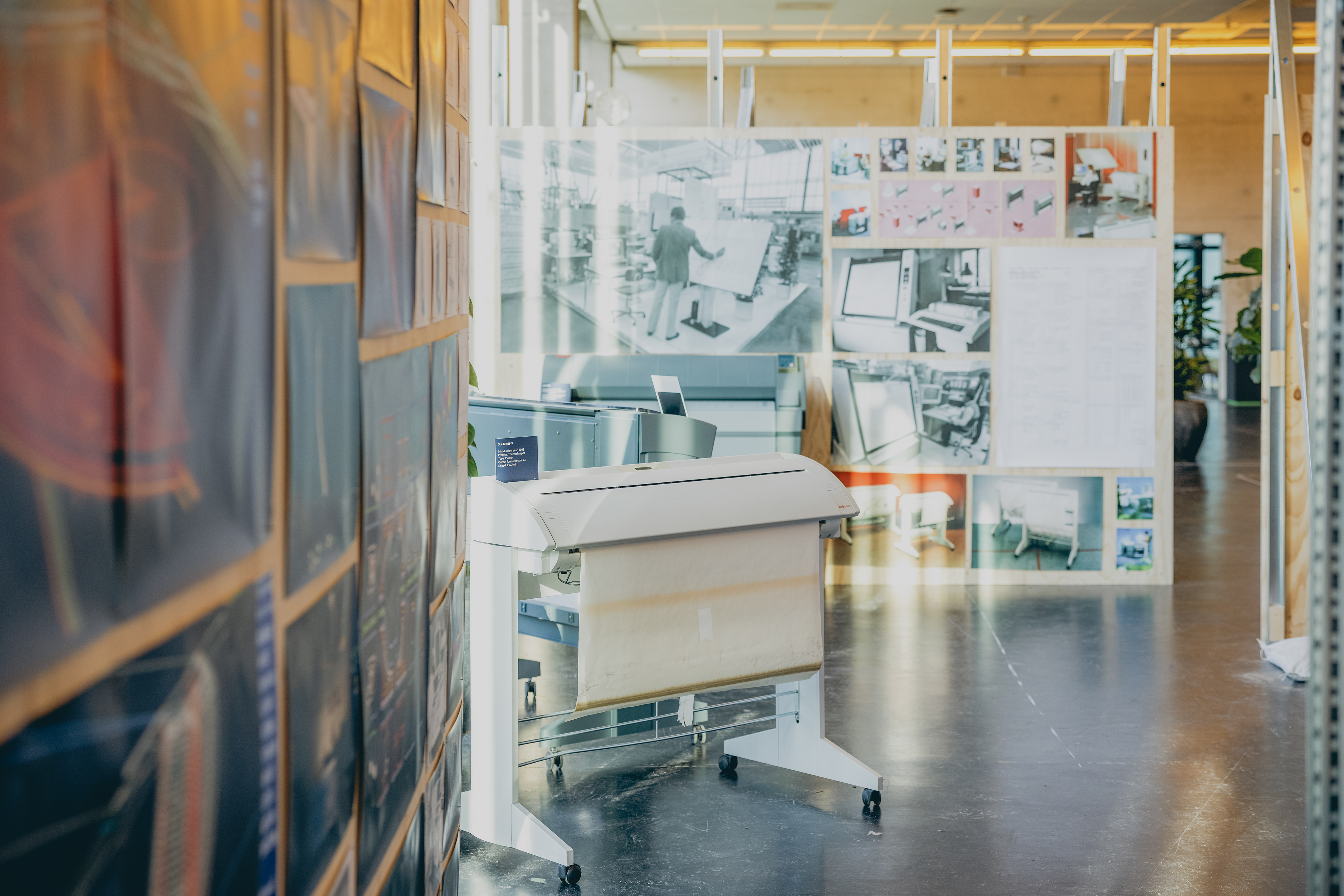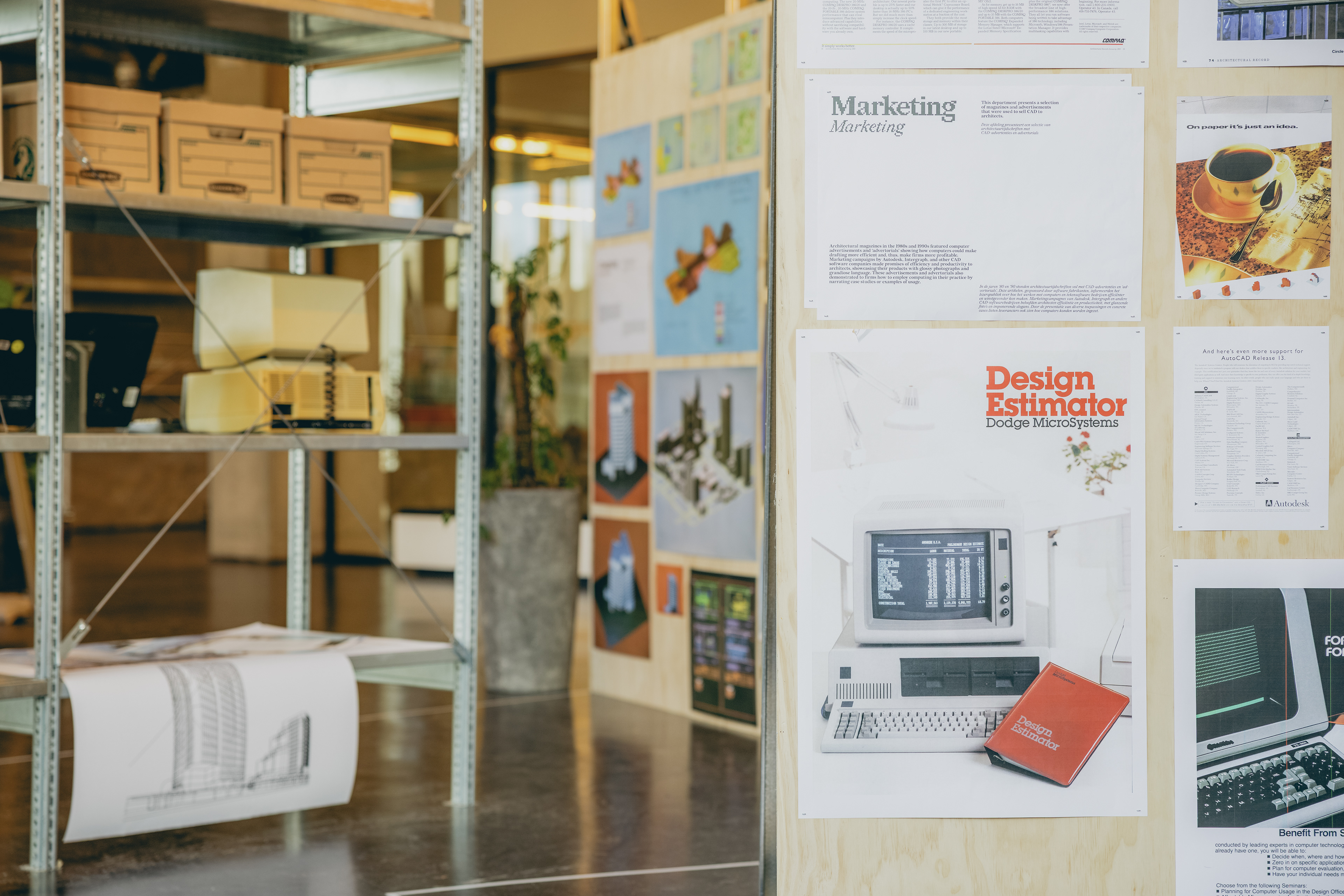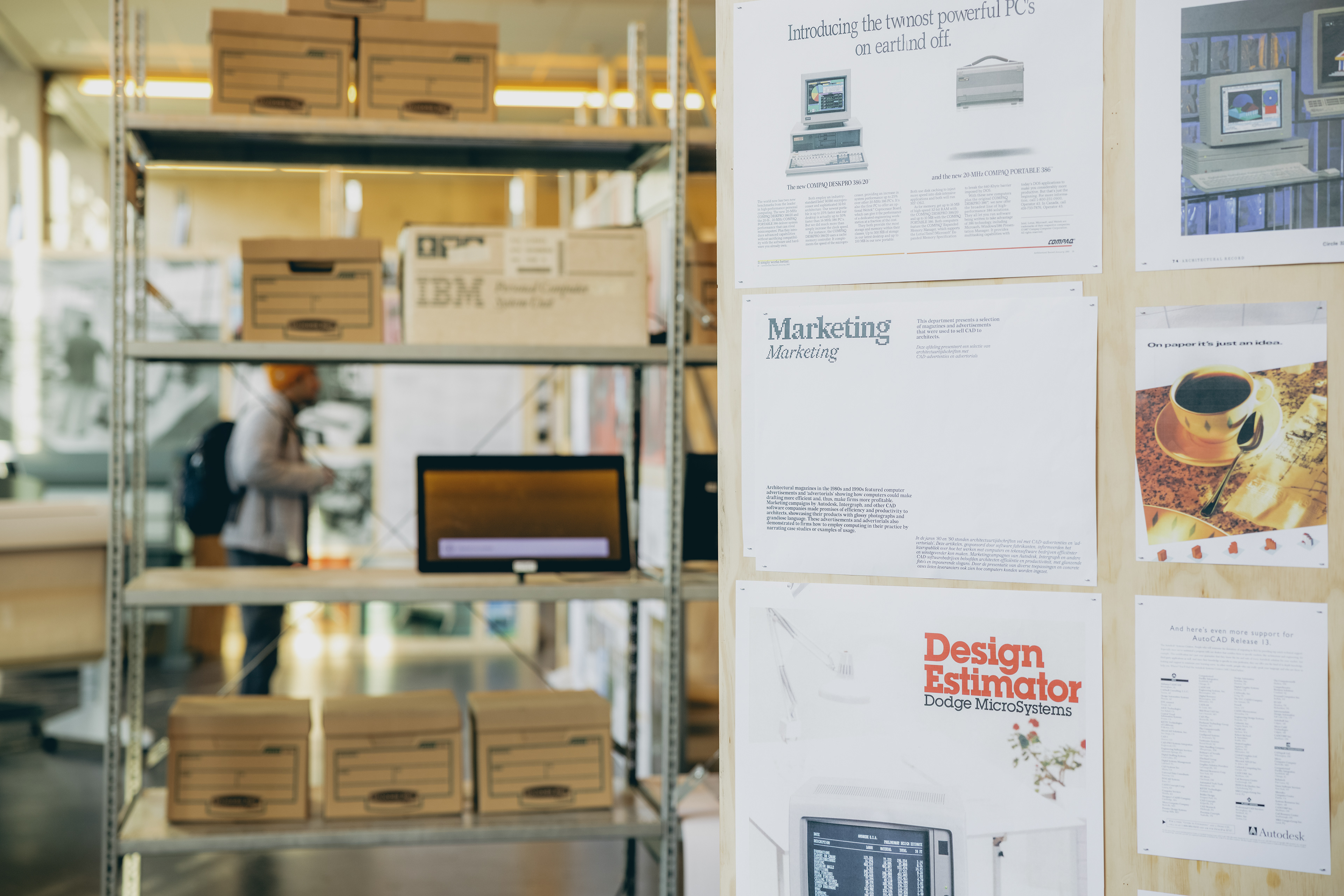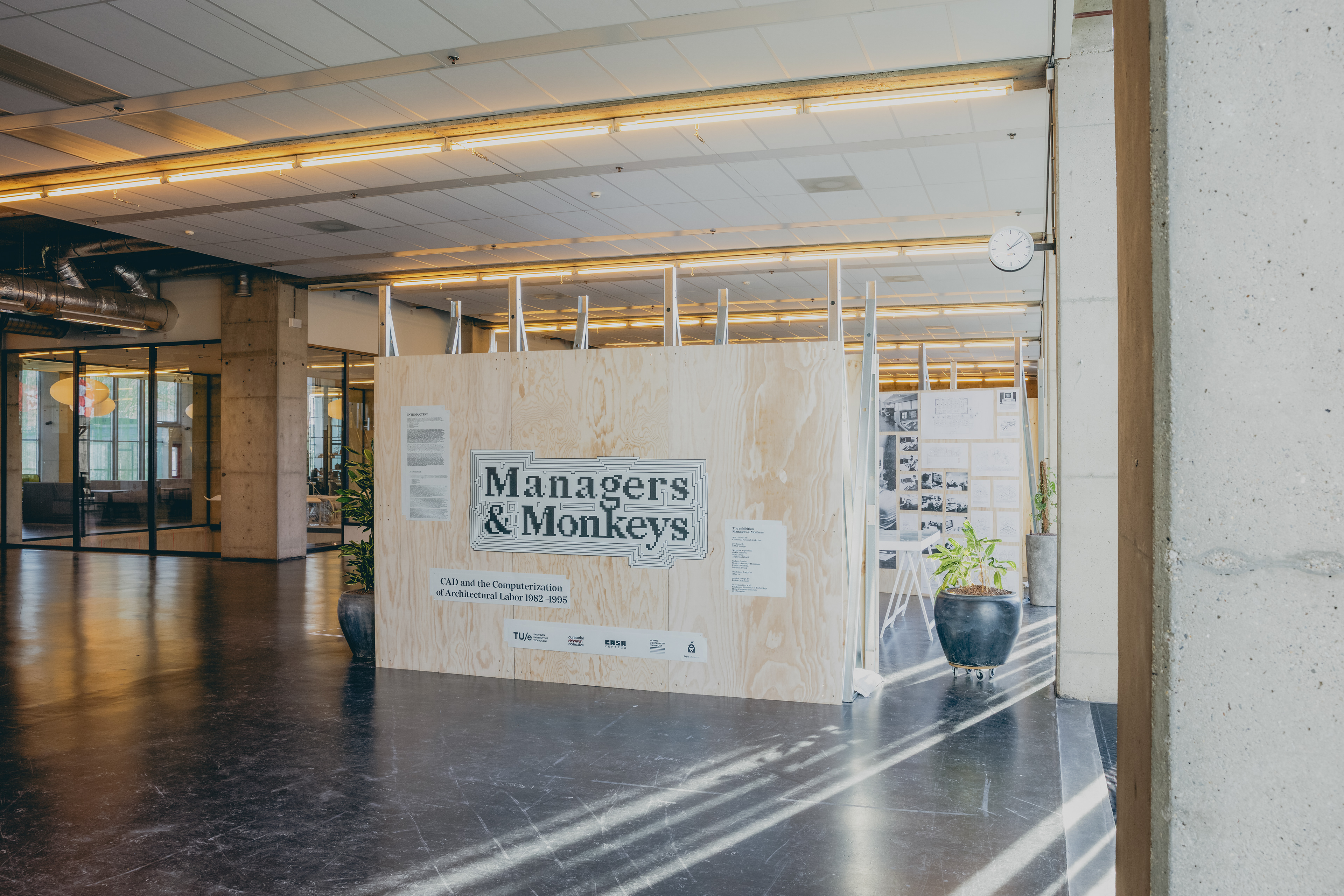

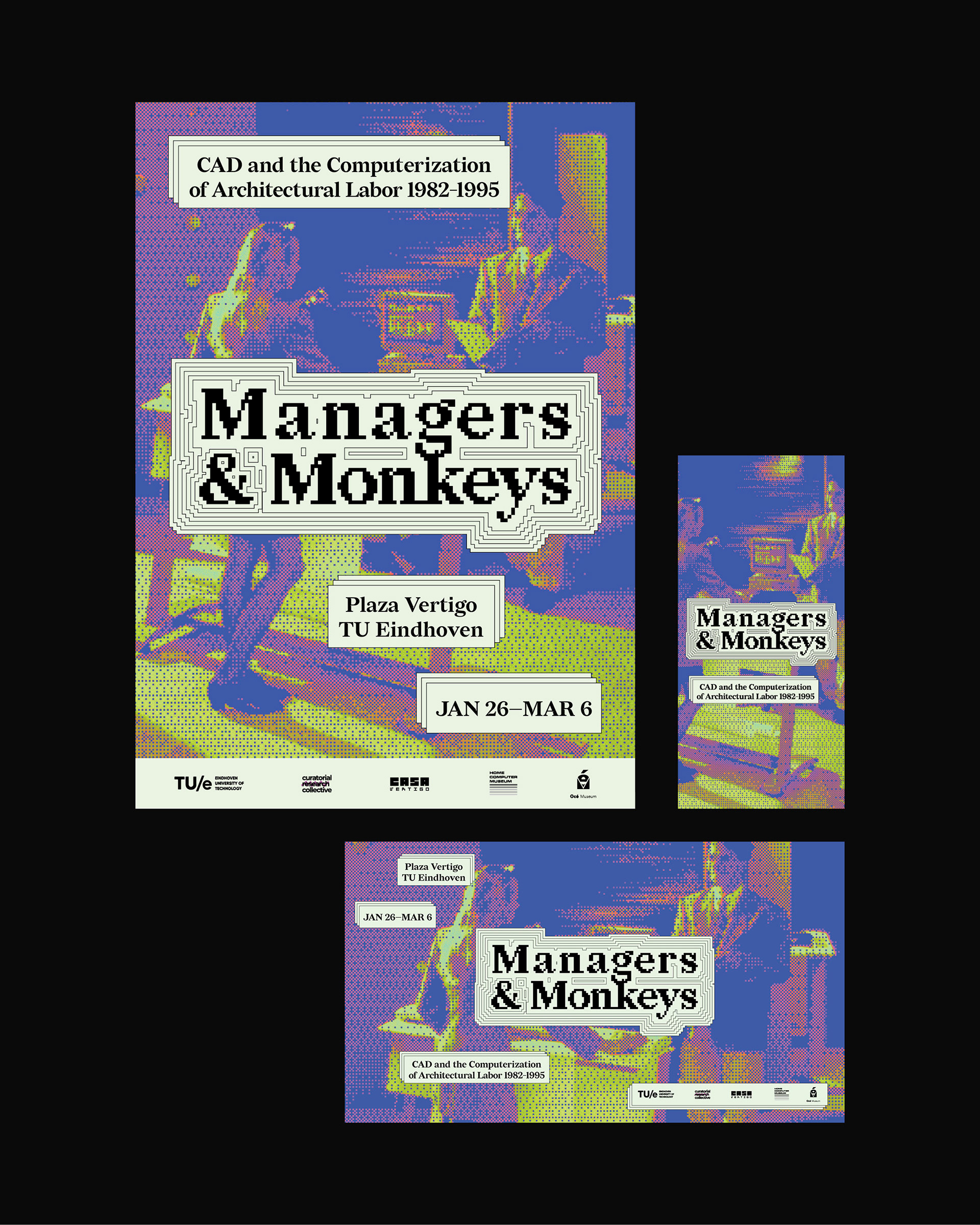
Graphic design for an Exhibition, 2026. During the 1980s and 90s, the labour that architects performed in their studios changed drastically due to the introduction of affordable desktop computers and digital design and drafting software. To better understand this unique transitional period in the history of architectural labor, this exhibition investigates the relationships between software, hardware, and design practice through five themes: 1. COMPUTING & KNOWING 2. DRAWING & BUILDING 3. DESIGNING 4. PRINTING & PLOTTING 5. MARKETING In the 1980s, architectural labor underwent an intense transformation. While the previous decades saw significant advancements and experiments with computer-aided design (CAD) and drafting tools, it was in the 1980s and 1990s that this software became standardized and accessible to a wider group of architects. This was due primarily to the introduction of desktop computers (also known as minicomputers or personal computers). These smaller machines were significantly more affordable than previous mainframe and microcomputer systems, which at times occupied entire rooms in offices. For the average small to mid-sized architecture firm considering the incorporation of CAD into their workflows, these systems were the most cost-effective option. As a result, an entire market of desktop PC CAD applications emerged. Some of the most notable software that emerged from this shift included AutoCAD, MicroStation, AutoTrol, and FastCAD, among others. These programs would not only eventually dominate much of architectural drafting and design work, but would also set the terms for the architectural output for decades to come, like the CAD standards for drawings and the specific file formats for information exchange (as seen with AutoCAD’s DWG format). Desktop CAD tools also transformed the physical and operational aspects of the architectural office. New roles were required to manage the data and to ensure that digitally produced drawings met the same quality standards as those produced by hand or mechanically. Large firms with established resources often have CAD divisions or computer departments. Medium to small offices, on the other hand, invested in hiring or promoting existing employees to CAD managers and computer draftspersons. For many firms in the US and Europe, this period was marked by significant stress and uncertainty. Would the computer make the office more efficient? Was the firm buying the right software? Were the right people hired? Where and when should the computer be used in the complex process of designing and constructing architecture? To better understand this period in the history of architecture, this exhibition examines the relationships between software and practice. By examining the artifacts and narratives presented by those who created, sold, wrote about, and promoted CAD software, we can assemble a clearer picture of how new tools affect not just the way we imagine and design architecture, but also the labor of design in specific contexts. The exhibition Managers & Monkeys addresses the way corporate architecture firms were physically, conceptually, and socially transformed in response to the standardization of CAD workflows. Its title references how priorities began to include information and data management as well as the social shifts in the office, which led to colloquial designations such as the nickname ‘CAD monkey’ for those digital draftspersons who began to replace manual drafters. As the new office subjects during this period, CAD managers and CAD monkeys were instrumental to the computerization of architectural labor in general, setting the rules, best practices, and traditions for working with these tools, many of which are still in place today.